

TL;DR:
- Effective remote management requires shifting from activity-based to outcome-based systems and establishing clear communication norms. Building documented processes, reliable tools, transparency, and structured review cycles is essential for sustained clarity and accountability. Leaders must engineer alignment through explicit systems rather than relying on office habits, utilizing purpose-driven tools like Luxenger to support secure, scalable communication.
Managing remote teams sounds straightforward until you're 18 months in and realizing that your best people are misaligned, your project reviews are performative, and nobody agrees on who made the last major decision or where to find it. GitLab's Remote Work Report, which surveyed nearly 3,900 remote professionals, found that while remote workers often report strong satisfaction and output, organizations consistently struggle with cross-project alignment. The gap between individual productivity and organizational coherence is where enterprise remote management breaks. This guide gives you the frameworks to close it.
Table of Contents
- What you need to manage remote teams effectively
- Step-by-step: Building clarity and accountability from day one
- Monitoring performance: Balancing productivity and trust
- Enterprise-grade collaboration: Tools and technology for smooth execution
- Why remote team management breaks—and how to fix it for good
- Take remote team management further with Luxenger
- Frequently asked questions
Key Takeaways
| Point | Details |
|---|---|
| Clarity beats activity | Success comes from clear, documented expectations and processes—not constant oversight or busyness. |
| Ethical visibility | Monitor enterprise teams by tracking outcomes, not invasive behavior metrics, to preserve trust. |
| Leverage the right tools | Choosing robust, secure collaboration platforms is foundational for smooth, large-scale remote teamwork. |
| Default to asynchronous | Making asynchronous work the norm prevents time zone clashes and creates resilient, scalable teams. |
What you need to manage remote teams effectively
The single biggest mistake enterprises make when shifting to remote work is treating it like a location change rather than an operating model change. Moving your office routines into video calls and chat threads is not a strategy. It is a recipe for friction, decision bottlenecks, and quiet disengagement.
The first requirement is a mindset shift from activity-based to outcome-based management. Stop measuring how many hours someone is logged in or how quickly they respond to messages. Start measuring whether they delivered what they committed to, at the quality expected, within the timeline agreed upon. This sounds obvious, but most enterprise performance systems are still wired around presence and activity proxies.
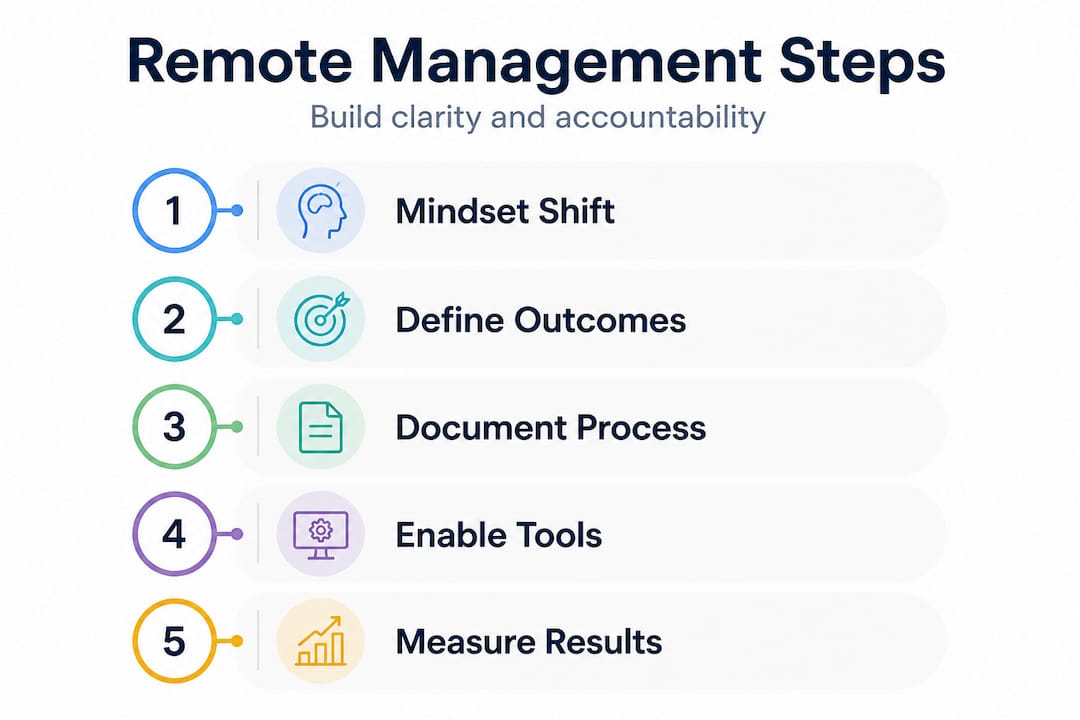
According to DigitalOcean's remote management guidance, the most effective approach is to establish clear expectations around communication channels, meeting formats, and workflows, then build accountability exclusively around measurable outcomes. That means rewriting job expectations and team charters to reflect deliverables, not attendance.
Beyond mindset, you need four concrete prerequisites in place before anything else scales:
- Documented processes: Every repeated workflow should be written down and stored where anyone on the team can find and follow it without asking a colleague.
- Clear communication norms: Which channel is for urgent escalations? Which is for project updates? What response time is expected where? These decisions prevent cognitive overload and missed messages.
- Reliable tools: Your communication stack should be secure, integrated, and consistent across the team. Fragmented tools are the enemy of alignment.
- Radical transparency: Decisions, priorities, and strategy changes should be visible and accessible to everyone affected, not just those who were in a meeting.
| Office convention | Remote equivalent |
|---|---|
| Walk-up questions | Async message with a clear response window |
| Whiteboard brainstorm | Collaborative docs with structured input periods |
| In-person status updates | Written weekly check-ins in a shared channel |
| Manager visibility | Outcome dashboards and documented milestones |
| Hallway decisions | Documented decision records with context and rationale |
Building efficient remote team workflows starts here, at the policy level, before you touch any technology.
Pro Tip: Over-communicate decisions and updates, especially asynchronously. When in doubt, write it down and share it one more time than you think you need to. Teams working across time zones or departments cannot fill in context the way co-located teams can.
Step-by-step: Building clarity and accountability from day one
Once the foundational prerequisites are in place, the next step is designing systems that embed clarity and accountability into daily operations from the start. This is not a one-time setup. It is an ongoing engineering effort.
One of the most important findings from the GitLab Remote Work Report is that remote management fails most often when companies carry over office-centric assumptions. Synchronous time gets misaligned with time zones and individual work schedules. Informal decisions default to whoever happens to be in the same Slack channel at the right moment. Accountability becomes inconsistent because not everyone has the same visibility into what was agreed and when.
Here is a sequenced approach to building clarity and accountability into your remote team from day one:
- Define communication channels by purpose. Assign specific tools to specific use cases and publish this in a team handbook. Chat for quick updates, email for formal external communication, a dedicated project tool for task tracking, and video for relationship-building or complex problem-solving.
- Establish meeting cadence and purpose. Every recurring meeting should have a clear owner, a standing agenda, and a documented output. If a meeting produces no documented output, question whether it needs to exist.
- Clarify decision rights explicitly. Use a simple framework like RACI (Responsible, Accountable, Consulted, Informed) to make it clear who has the authority to make which decisions. Ambiguity here is where remote teams lose weeks.
- Create a documentation-first culture. Any significant decision, directional change, or cross-team agreement should be recorded in a searchable, accessible location. Your documented remote team workflows become institutional memory.
- Build structured review cycles. Weekly team check-ins, bi-weekly one-on-ones, and monthly goal reviews give people consistent touchpoints without requiring constant synchronous availability.
| Mode | Best tools | Best for |
|---|---|---|
| Synchronous | Video calls, voice huddles | Complex decisions, relationship building, conflict resolution |
| Asynchronous | Chat threads, shared docs, recorded video | Status updates, knowledge sharing, routine decisions, cross-timezone teams |
Pro Tip: Make asynchronous communication the default, not the exception. If a decision can be made via a documented thread without pulling six people into a 45-minute call, that is a win for everyone's productivity and focus time. Reserve synchronous time for situations where nuance and real-time dialog genuinely matter.
Monitoring performance: Balancing productivity and trust
Accountability needs visibility. But the way you create visibility matters enormously. Leaders who install screen-recording software or keystroke trackers send a clear signal to their team: we do not trust you. That signal destroys the psychological safety that makes remote teams perform.
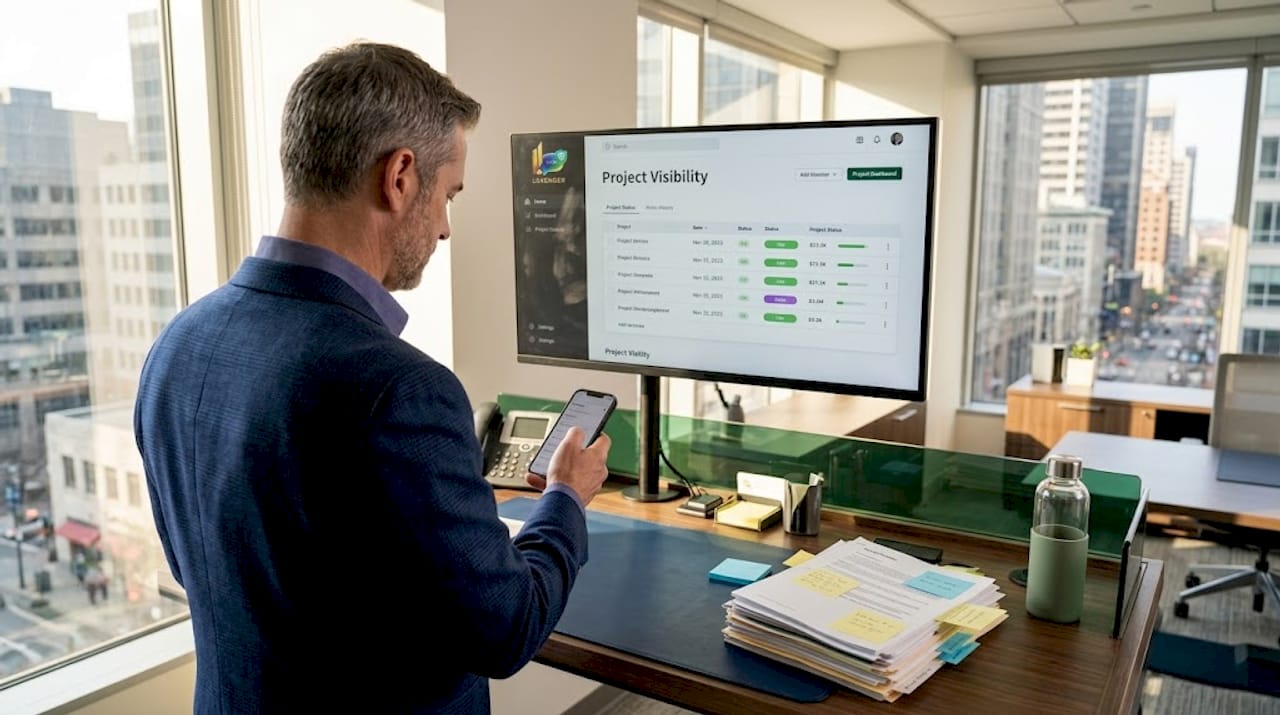
HBR research on remote monitoring is direct on this point: intrusive surveillance harms trust and creativity. Organizations that prioritize ethical, performance-relevant tracking see better results than those that monitor activity signals with no connection to actual outcomes.
Here is what is worth tracking, and how to do it in a way your team will actually support:
- Deliverable completion rates: Are people hitting their milestones on time? Track this through your project management tool, not through manager perception.
- Goal progress visibility: Weekly or bi-weekly updates on key results allow leaders and peers to see momentum without micromanaging daily activity.
- Team health signals: Engagement survey scores, participation in team rituals, and response to feedback are meaningful indicators of whether your culture is intact.
- Communication quality, not quantity: Are decisions being documented? Are blockers being surfaced early? Are updates written with enough context for others to act on them?
"The shift from monitoring presence to measuring outcomes is not just an ethical choice. It is a performance strategy. Teams that feel trusted deliver more creative, higher-quality work. Teams under surveillance learn to look busy."
Only 37% of enterprises report strong cross-project alignment, which means most organizations are missing critical visibility into how work connects across teams. The answer is better systems and clearer processes, not more surveillance.
When you need guidance on structuring those systems inside your communication channels, resources on how to improve team messaging provide actionable frameworks tailored for enterprise teams.
Enterprise-grade collaboration: Tools and technology for smooth execution
With the right processes and oversight in place, your technology stack becomes the vehicle that makes it all run. But choosing and maintaining enterprise collaboration tools is its own discipline. The wrong stack creates friction, security gaps, and adoption resistance that quietly derail even well-designed remote strategies.
The features that matter most at enterprise scale are different from what works for a 10-person startup. You need robust security standards, deep integrations with your existing systems, reliable performance across geographies, and AI-powered features that help your team work faster without adding complexity.
Microsoft Learn's best practice configurations dashboard offers an instructive example: even established enterprise platforms require ongoing monitoring and configuration management to maintain meeting quality and network performance. Connectivity issues, permission mismatches, and audio problems in video calls are not minor inconveniences. They erode meeting effectiveness and create workarounds that fragment your communication stack.
| Platform capability | Must-have for enterprise |
|---|---|
| Secure messaging | Bank-grade encryption, data residency controls |
| File sharing | Version control, access permissions, audit trails |
| Video and voice | Reliability at scale, recording and transcription |
| Issue tracking | Integration with PM tools, assignment clarity |
| AI features | Meeting summaries, real-time translation, smart search |
To troubleshoot collaboration breakdowns before they compound, follow this sequence:
- Check network configuration first. Most performance issues in enterprise collaboration tools trace back to network settings, firewall rules, or bandwidth allocation. Do not assume the app is at fault.
- Audit permissions and access controls. If people cannot find files or join channels, the problem is usually a permissions gap. Centralized access management prevents this from becoming chronic.
- Identify adoption gaps. If teams are bypassing your official tools and using consumer apps instead, find out why. Usually it is a usability issue that can be addressed with better onboarding or configuration.
- Review integration points. Where your collaboration tools connect to other systems (identity management, HR platforms, project tools) is where data gets lost or duplicated. Map these integration points and monitor them.
For a broader look at how AI-driven platforms are changing the game, the AI-powered team collaboration guide and a curated review of top AI team tools offer useful context for enterprise decision-makers evaluating their options.
Why remote team management breaks—and how to fix it for good
Here is the uncomfortable truth that most remote management advice avoids: the majority of enterprise remote strategies fail not because of bad tools or poor intentions, but because leaders never fully let go of office logic.
They move their standups to Zoom. They replicate the org chart in Slack. They expect the same informal coordination that happened in office hallways to somehow reproduce itself across distributed time zones. It does not. And every week it fails to appear, decisions slow down, trust erodes, and the best people quietly start looking elsewhere.
The real failure point is that synchronous routines and hallway decisions are not just communication habits. They are load-bearing structures in how office-based organizations actually function. When you remove the hallway, you have to consciously engineer what replaced it. Most enterprises skip that engineering step.
What the best distributed organizations do differently is treat documentation and explicit decision rights as first-class business assets, not administrative overhead. A well-maintained team playbook is worth more than any number of all-hands meetings. A clear RACI for a major product decision saves more time than a week of alignment calls. And when you build on secure AI-enabled work channels, you can automate the capture and distribution of key decisions without adding process burden.
The leaders who get this right do not just set up better tools or write clearer OKRs. They fundamentally accept that alignment is not automatic. It is engineered through intentional systems, consistent practices, and a culture where writing things down is treated as professional excellence, not bureaucratic busywork.
Pro Tip: Treat your team playbooks and documented decision loops the same way you treat your financial controls: as business-critical infrastructure. They are not nice to have. They are how your organization retains knowledge, moves fast, and recovers from disruption.
Take remote team management further with Luxenger
The frameworks in this guide only work when your communication platform can support them at scale. Clarity breaks down when messages get buried, decisions go undocumented, and global teams lose context in translation.
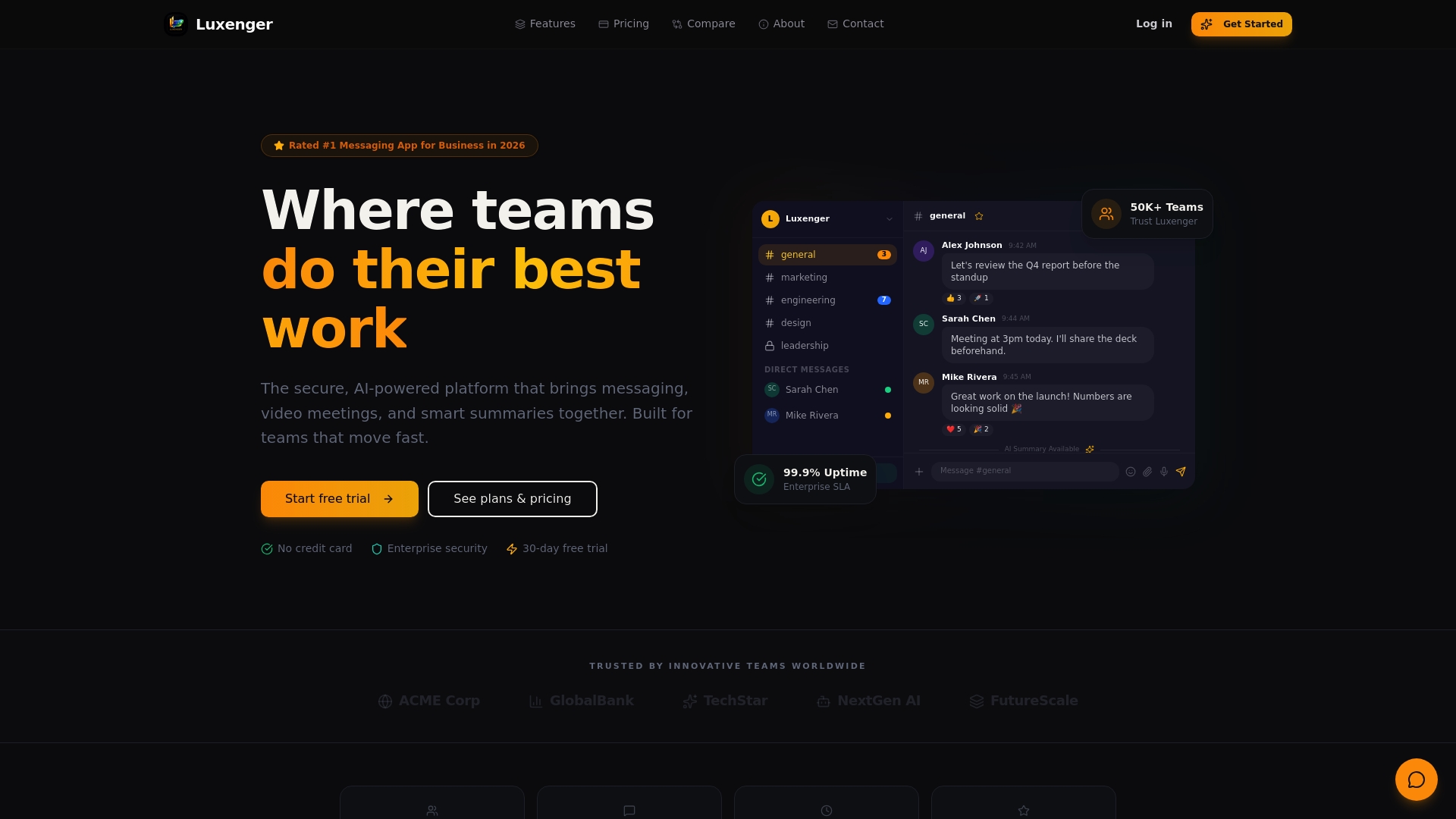
Luxenger is built for exactly this challenge. As an enterprise messaging platform with bank-grade security, AI-powered conversation summaries, real-time multilingual translation, and voice huddles, Luxenger gives distributed teams the infrastructure to operate with the clarity and accountability this guide describes. Whether you are coordinating across five time zones or managing sensitive cross-departmental decisions, Luxenger keeps your team aligned without compromising security or speed. Explore enterprise pricing and see what purpose-built remote collaboration looks like in practice.
Frequently asked questions
How do you keep remote teams aligned across projects?
Invest in clear documentation, single sources of truth, and regular alignment reviews. GitLab's research confirms that organizations struggle with cross-project alignment even when individual productivity is high, making intentional alignment systems essential.
What is the best way to measure remote employee performance?
Focus on deliverables and outcomes rather than activity signals or logged hours. HBR research shows that ethical, outcome-focused tracking builds trust and produces better results than invasive monitoring approaches.
Which collaboration tools do enterprises need for remote teams?
Enterprises need secure messaging, reliable video and voice, centralized file sharing with access controls, and a platform that monitors connectivity and performance. Microsoft Learn specifically recommends using best-practice configuration dashboards to maintain quality at scale.
How should meeting culture change for remote teams?
Shift from default synchronous meetings to documented asynchronous decision-making as the standard. GitLab's findings show that office-centric assumptions about synchronous time are among the most common failure points in remote team management.