

TL;DR:
- Effective management of confidential conversations requires deliberate preparation, secure environment control, and trustworthy communication techniques to maintain trust. Proper documentation, digital safeguards, and disciplined follow-up further protect privacy, as technology alone cannot ensure confidentiality without responsible human behavior.
Managing confidential conversations is the process of conducting private, sensitive discussions that protect personal or organizational information while preserving trust between participants. In corporate environments, the stakes are high: a single mishandled disclosure can damage careers, expose legal liability, and fracture team trust. Knowing how to manage confidential conversations requires more than good intentions. It demands deliberate preparation, the right physical and digital environment, and clear behavioral boundaries. Platforms like WorkTango have built entire features around confidential workplace dialogue because organizations recognize that privacy is a prerequisite for honest communication.
How to manage confidential conversations: preparation is everything
Effective preparation is the single most reliable predictor of whether a sensitive conversation stays contained. Without it, managers default to improvisation, which is where accidental disclosures happen.
Follow these steps before any confidential discussion:
-
Clarify the issue in writing. Define exactly what the conversation needs to cover and what it does not. Scope creep in sensitive discussions is one of the fastest ways to overshare. If the topic is a performance concern, write a one-paragraph summary of the specific behavior, not the person's broader history.
-
Gather documentation in advance. Collect relevant records, policies, or prior communications before the meeting. Preparation helps contain the conversation within defined boundaries and prevents off-the-cuff disclosures driven by memory gaps.
-
Choose the right timing. Schedule the conversation when all participants can give it full attention. A Friday afternoon slot before a holiday weekend signals that the topic is low priority and invites distraction. Mid-week mornings typically produce the most focused engagement.
-
Define who needs to be in the room. Predefined role-based access and communication plans prevent unnecessary disclosure. Ask yourself: does this person need to know, or do I simply feel more comfortable with them present? Those are different justifications with different consequences.
-
Anticipate escalation scenarios. If the conversation might surface information requiring HR or legal involvement, know your escalation path before you sit down. Discovering mid-conversation that you need to loop in a third party without a plan creates confusion and erodes trust.
Pro Tip: Write your three core objectives on a notepad before the meeting starts. If the conversation drifts, glance at the list. It keeps you anchored without appearing scripted.
What environment best protects a sensitive discussion?

The physical and digital setting of a confidential conversation does more work than most managers realize. Environment design materially influences both confidentiality and participant comfort, which means a poorly chosen room can undermine even the most carefully prepared conversation.
For physical settings, apply these standards:
- Book a private room with a door that closes. Open-plan offices, glass-walled conference rooms, and shared spaces are not appropriate for sensitive talks. Sound carries, and visible body language signals to observers that something significant is happening.
- Apply a clean desk policy. Remove any documents unrelated to the current conversation before participants arrive. Mismatches between message and environment, such as unattended documents visible on a desk, undermine confidentiality and damage trust even when no one reads them.
- Disable shared screens and whiteboards. If a screen is visible from the doorway or a whiteboard contains notes from a previous meeting, clear them before the conversation begins.
For digital environments, the standards are equally specific:
| Channel | Recommended practice | Risk if ignored |
|---|---|---|
| Video conferencing | Use end-to-end encrypted platforms | Recording leaks to unauthorized parties |
| Instant messaging | Verify recipient before sending | Accidental disclosure to wrong contact |
| Confirm addresses; avoid reply-all | Sensitive content reaching unintended inboxes | |
| AI transcription | Obtain explicit consent before enabling | Participant distrust; potential legal exposure |
The last row in that table deserves particular attention. Consent for AI transcription must be obtained separately and transparently. A visible AI participant in a meeting can cause discomfort and signal to employees that the conversation is being recorded for purposes beyond the immediate discussion. For genuinely confidential talks, the safest default is to disable AI notetakers entirely and take manual notes instead. You can find more on selecting the right tools in this guide to encrypted workplace chat.
Pro Tip: Send a brief agenda to participants before the meeting that does not name the sensitive topic. This signals preparation without broadcasting the subject to anyone who might see the calendar invite.
What communication techniques build trust during sensitive talks?
The interpersonal dimension of managing private conversations is where most managers underinvest. Technical controls protect information at rest and in transit. Human behavior protects it during the live exchange.
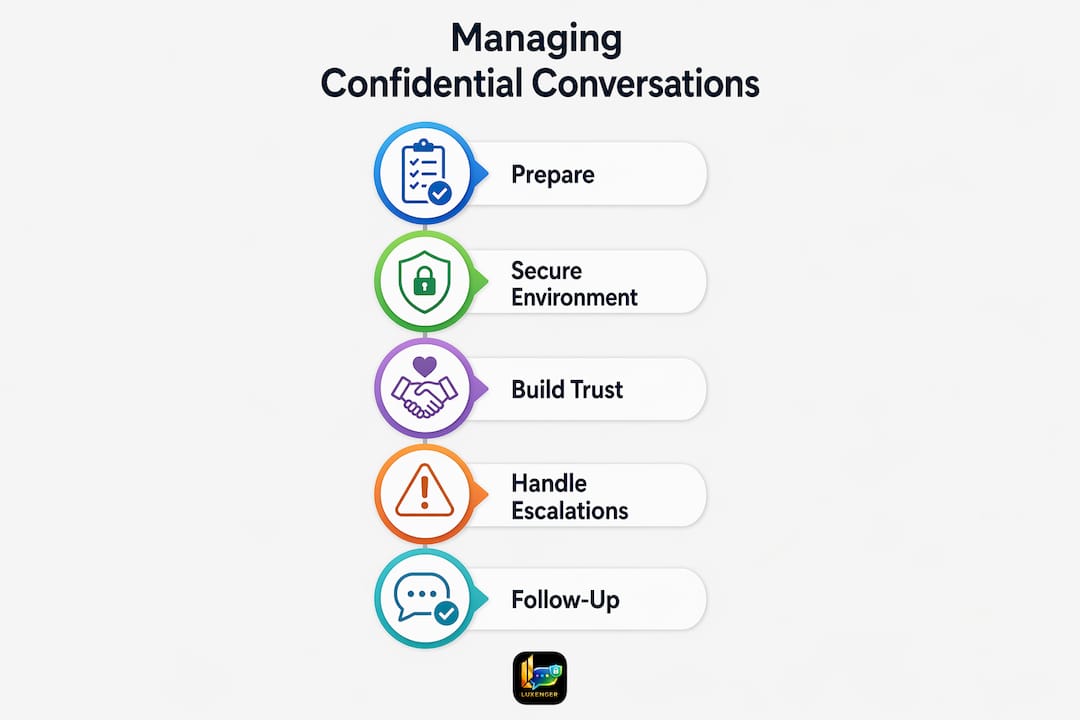
Confidentiality is a leadership skill that balances transparency with discretion to maintain trust and comply with legal obligations. That balance is not instinctive. It requires deliberate practice.
Start the conversation by naming the confidential nature of the discussion explicitly. Say: "What we discuss here stays between us unless we agree otherwise or a legal obligation requires action." This single sentence sets expectations, reduces anxiety, and signals that you take the responsibility seriously.
Use collaborative, problem-solving language throughout. Phrases like "What would help you most here?" or "Let's think through this together" shift the dynamic from interrogation to partnership. Participants who feel heard are less likely to seek outside validation by discussing the conversation with colleagues afterward.
Active listening is not passive silence. It means reflecting back what you hear: "It sounds like the core concern is X. Is that right?" This technique validates the speaker's experience and confirms that you have understood correctly before responding. It also slows the conversation down, which reduces the risk of reactive disclosures.
When a disclosure requires escalation, handle it directly. Tell the participant: "What you've shared means I have an obligation to involve HR. I want to be transparent about that rather than act without telling you." Honesty about escalation preserves more trust than a participant discovering later that you acted without warning. Protecting emotional privacy means being honest about the limits of confidentiality, not pretending those limits do not exist.
Pro Tip: Avoid taking notes on a shared screen during the conversation. Write by hand or use a personal device. Visible note-taking on a projected screen signals surveillance, not support.
What are best practices for follow-up after a confidential conversation?
The conversation ending does not mean the confidentiality obligation ends. Most privacy breaches in corporate settings happen after the meeting, in the documentation and follow-up phase.
-
Write up notes within 24 hours. Memory degrades quickly. A delayed summary introduces inaccuracies that can misrepresent what was said. Write factual notes immediately, focusing on decisions made and next steps agreed upon, not on emotional tone or personal impressions.
-
Store documentation per organizational policy. Sensitive documentation must be secured and accessible only to authorized parties. This means a password-protected folder, an HR information system, or a secure enterprise platform. A shared drive accessible to the broader team is not appropriate storage for confidential records.
-
Communicate follow-up plans without exposing sensitive details. If a conversation results in a process change or a support resource being offered, communicate the outcome without explaining the reason. "We're adding a new check-in process for the team" does not require disclosing that it originated from a specific employee's concern.
-
Control informal disclosure. Managers often overestimate the need to share information after sensitive conversations. Resist the impulse to debrief with a trusted colleague unless that colleague has a legitimate need to know. Informal leaks are the hardest to retract and the most damaging to trust.
Pro Tip: Before sending any follow-up email, ask: "Does this message reveal anything about the conversation that the recipient does not need to know?" If yes, rewrite it. This single filter eliminates most post-conversation disclosure risks.
For a broader framework on preventing accidental leaks across email and messaging channels, the guide on internal communication best practices covers the full workflow.
Key takeaways
Effective management of confidential conversations requires preparation, environment control, interpersonal discipline, and secure documentation practices working together as a system, not as isolated steps.
| Point | Details |
|---|---|
| Prepare before every conversation | Define scope, gather documentation, and set disclosure boundaries before the meeting starts. |
| Control the physical and digital environment | Use private rooms, encrypted platforms, and disable AI transcription for genuinely sensitive talks. |
| Use trust-building communication techniques | Name confidentiality expectations upfront and use active listening to reduce post-conversation disclosure. |
| Secure documentation immediately | Write notes within 24 hours and store them in access-controlled systems per organizational policy. |
| Limit follow-up disclosure | Apply a need-to-know filter to every post-conversation communication, including informal debriefs. |
Why technology alone will never be enough
I have spent years watching organizations invest in encrypted messaging platforms and then watch confidentiality fail anyway. The reason is almost always the same: the technology was right, but the behavior around it was not.
The most common failure pattern I see is environment mismatch. A manager schedules a sensitive conversation in a glass-walled room because the private office was booked, tells themselves it will be fine, and then watches the employee's body language stiffen as colleagues walk past. The encryption on the messaging app is irrelevant at that point. The damage is done in the room.
The second pattern is unpreparedness. Managers who walk into sensitive conversations without a defined scope tend to overshare. They fill silence with context the other person did not need. They reference other employees' situations as examples. These are not malicious acts. They are the predictable result of not having thought through the conversation in advance.
What I have found actually works is treating confidentiality as a leadership competency, not a compliance checkbox. That means training managers on active listening, disclosure boundaries, and escalation protocols the same way you train them on performance management. It also means giving them tools that make the right behavior easy. When a platform like Luxenger makes encrypted messaging the default rather than an extra step, managers are more likely to use it consistently.
Technology and human skill are not alternatives. They are multipliers. Neither works well without the other.
— Matthew
Secure your team's sensitive conversations with Luxenger
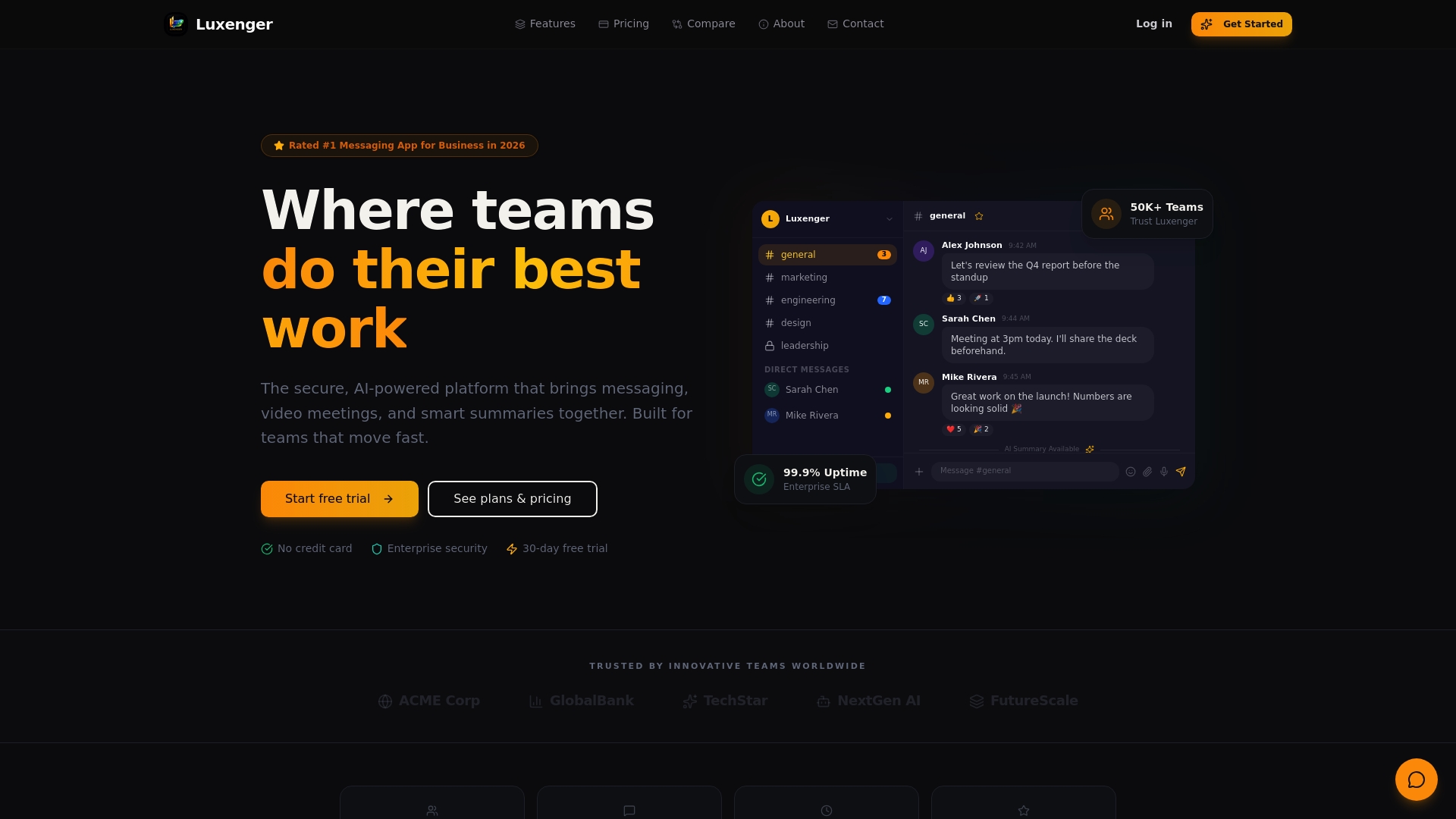
Luxenger is built for exactly the scenarios this article describes: sensitive discussions that require bank-grade encryption, controlled access, and a communication environment where confidentiality is the default, not an afterthought. Its platform supports end-to-end encrypted messaging, AI-powered summaries with consent controls, and real-time translation for multilingual teams, all within a single secure workspace. For corporate teams managing private conversations at scale, Luxenger removes the friction between good intentions and consistent practice. Explore how Luxenger for enterprise can protect your organization's most sensitive communications and request a demo to see the security architecture firsthand.
FAQ
What does managing confidential conversations mean at work?
Managing confidential conversations means conducting sensitive discussions in ways that protect the privacy of all participants and prevent unauthorized disclosure. It covers preparation, environment selection, communication technique, and secure documentation.
How do you secure sensitive talks in a digital environment?
Use end-to-end encrypted platforms, verify recipients before sending messages, and obtain explicit consent before enabling AI transcription. Digital communication risks include accidental leaks via email or messaging, which encryption and recipient verification directly mitigate.
When should a manager escalate a confidential conversation?
A manager must escalate when a disclosure involves legal obligations, safety concerns, or HR policy violations. The best practice is to inform the participant of the escalation directly rather than acting without their knowledge, which preserves more trust than a surprise follow-up.
How should notes from a confidential conversation be stored?
Notes should be written within 24 hours, stored in password-protected or access-controlled systems, and shared only with parties who have a legitimate need to know. Improper storage is one of the leading causes of post-conversation privacy breaches.
What is the biggest risk in managing private conversations?
The biggest risk is not the live conversation itself. Major confidentiality leaks happen in the capture layer, meaning notes, AI transcriptions, and recordings, which require stricter controls than the conversation itself.