

TL;DR:
- Effective multilingual communication integrates language, culture, technology, and governance to ensure inclusive, consistent collaboration. Starting with detailed audience and language mapping helps organizations build a reliable language matrix that guides strategy and tool selection. Proper content governance, structured interpreter briefing, and continuous measurement are essential to scaling and maintaining a successful multilingual program.
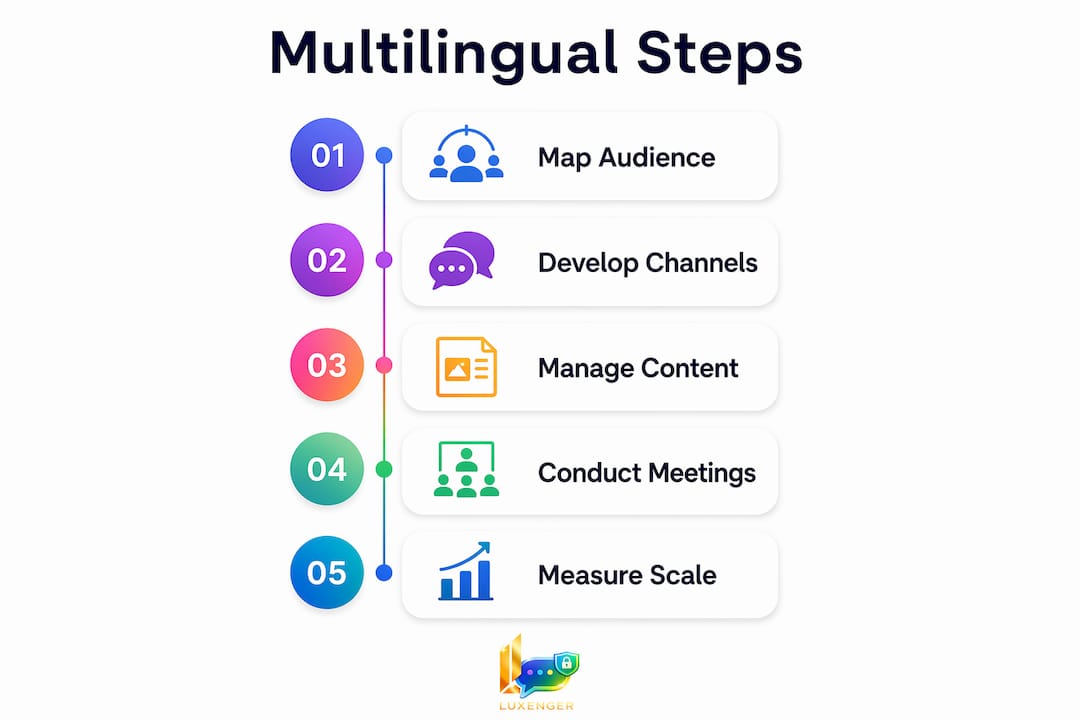
Step by step multilingual communication is a structured operating system that integrates language, culture, technology, and governance to enable consistent, inclusive collaboration across diverse corporate teams. Most managers treat multilingual communication as a translation task. It is not. Multilingual communication is defined as a coordinated workflow combining terminology control, localization, interpretation, accessibility, and cultural adaptation across every channel your organization uses. Get the structure right, and you eliminate the miscommunication, exclusion, and rework that cost global teams time and credibility.
What are the essential steps to map your audience and languages?
Audience and language mapping is the non-negotiable first step before selecting any tool or channel. Start with a needs assessment that identifies preferred, official, and operational languages by region, role, and communication channel. Skipping this step means you will build a communication system around assumptions rather than actual language behavior.
Follow this sequence to complete your mapping:
- Identify all languages in use. Survey employees, contractors, and key external stakeholders. Distinguish between languages people prefer for daily work versus languages required for legal or regulatory compliance. A manufacturing plant in Mexico, for example, may operate in Spanish daily but require English for ISO documentation.
- Segment by role and region. A customer-facing team in Singapore has different language needs than a finance team in Frankfurt. Map each segment separately and note where languages overlap.
- Identify your official and operational languages. Official languages are those used in binding documents, contracts, and compliance filings. Operational languages are those used in meetings, messaging, and informal coordination. These are rarely the same set.
- Map languages to channels. List every communication channel your organization uses, from intranet to town halls to support tickets, and note which languages are active or required in each.
- Benchmark against legal requirements. Some jurisdictions mandate communication in local languages for employee safety notices, HR policies, and customer contracts. Document these obligations before finalizing your language list.
This mapping exercise produces a language matrix: a simple table that cross-references roles, regions, channels, and language requirements. It becomes the reference document every subsequent decision depends on.
How to develop a channel strategy that aligns with language needs

Channel strategy answers one question: which communication method carries which content, in which languages, and at what quality level? The answer differs significantly depending on whether you are communicating internally or externally, and whether the content is static or live.
Translation, localization, and transcreation serve different purposes:
- Translation converts text from one language to another with fidelity to the source. Use it for policies, technical documentation, and compliance materials.
- Localization adapts content for cultural and regional context, including date formats, imagery, and idiomatic language. Use it for marketing materials, onboarding content, and customer-facing portals.
- Transcreation recreates content to achieve the same emotional impact in a new language. Use it for brand campaigns and executive messaging where tone matters as much as meaning.
Internal channels like newsletters should deliver simultaneous multilingual releases so every employee receives the same information at the same time. Staggered releases create information asymmetry and signal that some language groups matter less than others.
| Channel type | Recommended approach | Quality level required |
|---|---|---|
| HR policies and compliance | Translation + legal review | ISO 17100 standard |
| Internal newsletters | Simultaneous multilingual release | Professional translation |
| Customer support (live) | On-demand interpretation or AI chatbot | Human escalation path |
| Marketing campaigns | Localization or transcreation | Brand review required |
| Executive town halls | Simultaneous interpretation | Certified interpreters |
For live communication, workplace language access works best when you layer translated materials for policies and training with on-demand or onsite interpretation for higher-stakes conversations. A benefits enrollment session, for example, warrants live interpretation. A routine project update does not.
Pro Tip: When evaluating AI-assisted multilingual support, choose deliberately between a pivot-language translation pipeline and a native multilingual model. Pivot-language pipelines introduce compounding errors across three or more languages. Native multilingual large language models handle nuance better but require more deliberate escalation protocols when human agents take over.
What systems support consistent multilingual content management?
Content systems are what separate organizations that communicate multilingually from those that merely translate. The core components are terminology control, translation memory, a translation management system, and a quality governance framework.
Terminology control means maintaining a centralized glossary of approved terms in every operating language. Integrated glossaries reduce language drift, the gradual divergence of terminology across repeated content handoffs and updates. Without a glossary, the same product feature gets called three different things in three different markets within six months.
Translation management systems (TMS) like memoQ, Phrase, or SDL Trados automate workflow routing, enforce glossary use, and store translation memory so previously approved segments are reused automatically. Translation memory alone can reduce per-word translation costs by 30 to 70 percent on high-volume content, depending on repetition rates.
ISO 17100:2015 is the international standard for translation quality. ISO 17100 mandates a two-stage process: translation by a qualified linguist followed by independent revision by a second qualified linguist. This two-step review is the primary quality safeguard in professional translation workflows. If your vendor does not follow ISO 17100, you have no auditable quality guarantee.
| System component | Function | Who owns it |
|---|---|---|
| Centralized glossary | Controls approved terminology per language | Language owner or terminology manager |
| Translation memory | Stores and reuses approved translations | TMS administrator |
| Style guide per language | Governs tone, register, and formatting | Regional communication lead |
| ISO 17100 revision step | Independent quality check on all translations | Second qualified linguist |
Governance roles matter as much as the tools. Assign a language owner for each major operating language. That person approves new terminology, resolves escalations, and signs off on high-stakes content. Without named ownership, quality decisions default to whoever is available, and consistency collapses.
Pro Tip: Build your multilingual business documents framework around your TMS from day one. Retrofitting terminology control and style guides into an existing ad hoc translation process costs three to five times more than building it correctly at the start.
How to prepare and conduct effective multilingual meetings
The quality of multilingual meetings depends more on preparation and technical setup than on interpreter skill alone. A world-class interpreter working from incomplete materials in a poorly configured audio environment will underperform a competent interpreter who is fully briefed and technically supported.
Use this phased briefing timeline for any interpreted event:
- 4 to 6 weeks before the event. Send interpreters a preliminary brief covering the event purpose, audience profile, subject matter, and any known terminology challenges. This is the stage where interpreters flag knowledge gaps and request subject-matter resources.
- 2 weeks before the event. Deliver the content dump: speaker presentations, scripts, agenda, glossaries, and background documents. Share slides and glossaries before sessions so interpreters can prepare terminology and anticipate content flow.
- 48 hours before the event. Conduct a final polish session. Confirm any last-minute content changes, run a technical audio and platform check, and verify that all interpreter booths or remote channels are functioning.
- 30 minutes before the event. Run a live huddle with interpreters, AV technicians, and event coordinators. Confirm backchannel communication protocols and identify the point of contact for technical issues during the session.
Speaker protocol is equally critical. Brief speakers on maintaining a natural, steady pace and proper microphone technique. Simultaneous interpreters work in real time with a cognitive lag of two to three seconds. Speakers who rush, read dense text at speed, or stray from prepared materials create accuracy failures that no amount of interpreter skill can compensate for.
For hybrid or fully remote multilingual meetings, platforms like Interprefy or Kudo provide browser-based interpretation channels that participants access without additional hardware. AI-assisted tools work well for informal team syncs and asynchronous content. For board meetings, legal proceedings, or high-stakes negotiations, certified human interpreters remain the standard.
Pro Tip: Always test your remote team communication setup with a full technical rehearsal 48 hours before any interpreted event. Audio latency, codec incompatibility, and platform access issues are all solvable in advance. They are not solvable in the middle of a live session.
How to measure and scale your multilingual communication program
Measurement converts your multilingual communication program from a cost center into a demonstrable business function. Without KPIs, you cannot justify investment, identify failure points, or make the case for scaling.
Track these metrics from the start:
- Engagement by language. Monitor open rates, click-through rates, and response rates segmented by language group. Significant gaps between language groups signal either content quality issues or channel misalignment.
- Error and rework rates. Track how often translated content requires correction after delivery. High rework rates point to upstream problems: inadequate briefing, glossary gaps, or vendor quality issues.
- Survey feedback by language group. Run quarterly pulse surveys in each operating language and compare satisfaction scores across groups. Persistent gaps indicate that certain language communities are not receiving equivalent communication quality.
- Terminology consistency scores. Some TMS platforms generate consistency reports showing how often approved glossary terms are used versus ad hoc alternatives. This is your early warning system for language drift.
- Time-to-publish across languages. Measure how long it takes to release content in each language after the source is approved. Delays beyond 24 hours for internal communications indicate process bottlenecks.
Scaling a multilingual program sustainably requires documentation. Every process, from interpreter briefing to TMS workflow to sign-off authority, should be written down and version-controlled. When you add a new language or a new market, the playbook already exists. You are filling in variables, not rebuilding the system from scratch. Regular training for language owners and communication leads keeps role clarity sharp as teams grow and change.
Key takeaways
Effective step by step multilingual communication requires audience mapping, channel strategy, content governance, live communication preparation, and continuous measurement to function as a reliable operating system rather than a series of one-off translations.
| Point | Details |
|---|---|
| Start with audience mapping | Build a language matrix covering roles, regions, channels, and legal requirements before selecting tools. |
| Match channel to content type | Use translation for compliance, localization for culture, and transcreation for brand-critical messaging. |
| Govern with ISO 17100 | Require independent revision by a second linguist for all high-stakes translated content. |
| Brief interpreters in phases | Follow the 4 to 6 week, 2 week, 48 hour, and 30 minute briefing timeline for every interpreted event. |
| Measure by language group | Track engagement, rework rates, and consistency scores per language to identify gaps early. |
Why most multilingual programs fail before they start
I have reviewed communication programs at organizations that operate in six or more languages, and the failure pattern is almost always the same. The program was built around a translation vendor relationship rather than an internal governance structure. When the vendor changed or the volume spiked, the whole system became unreliable because there was no language owner, no glossary, and no defined quality standard inside the organization.
The second most common mistake is treating culture as optional. You can have perfect grammar in every language and still alienate an entire region because the tone was wrong, the imagery was inappropriate, or the communication assumed a Western corporate context that does not translate. Cross-cultural communication tips matter most at the design stage, not as an afterthought during review.
Technology helps, but it does not substitute for governance. AI translation tools and real-time platforms like Luxenger's translation features accelerate delivery. They do not decide what gets communicated, to whom, in what register, or with what level of formality. Those decisions require human judgment and organizational accountability. The managers who get this right are the ones who treat multilingual communication as a workplace communication discipline with defined roles, not as a service they outsource and forget.
Start earlier than you think you need to. Every week of planning before a multilingual program launch saves three weeks of rework after it.
— Matthew
How Luxenger supports your multilingual team communication
Managing multilingual teams across time zones and languages requires a platform built for that reality, not adapted from a monolingual default.
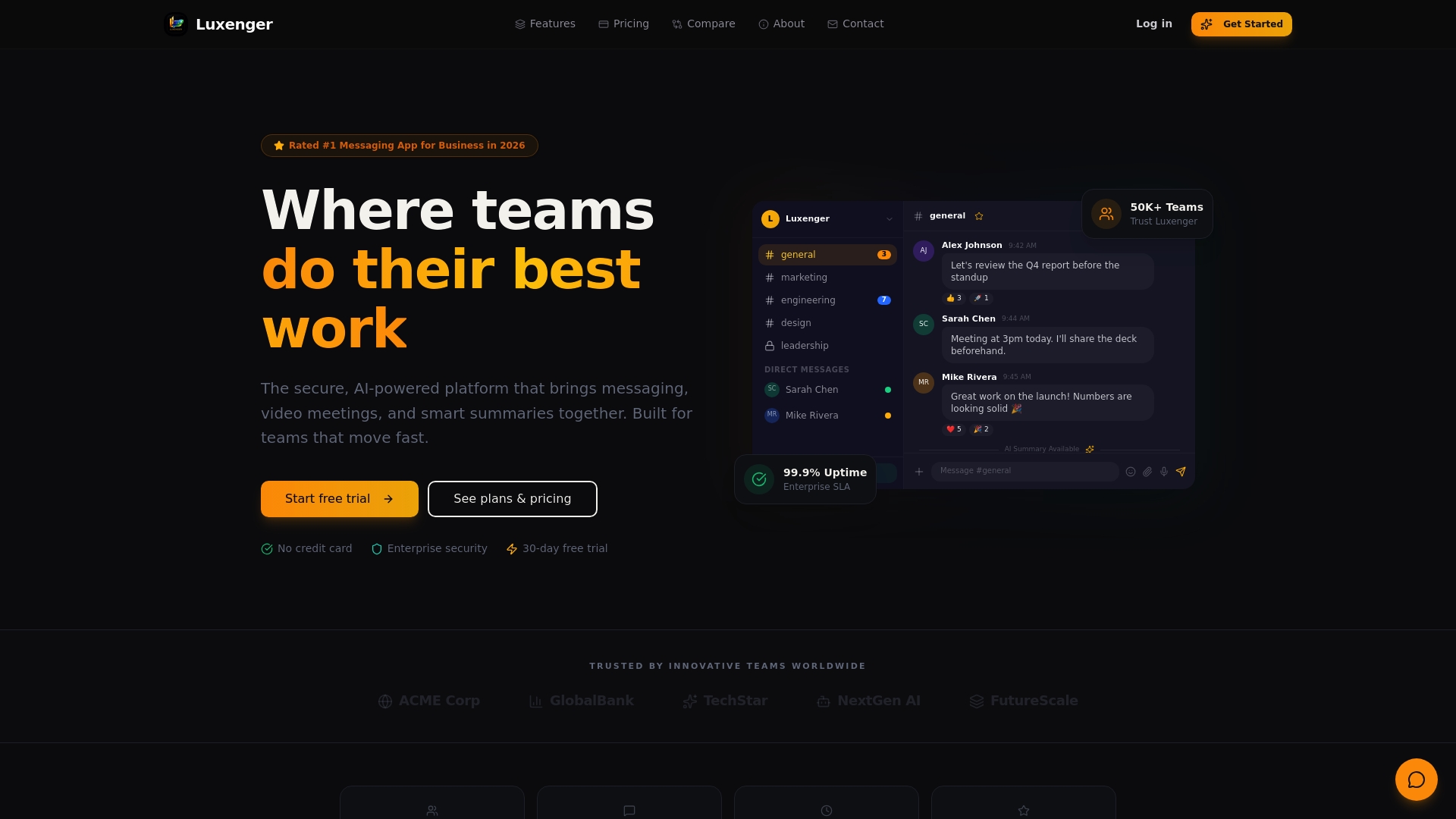
Luxenger is an enterprise messaging platform with real-time translation, AI-powered conversation summaries, and voice huddles built directly into the workflow. Your teams communicate in their preferred languages while Luxenger surfaces the key points in a shared language automatically. Bank-grade security means sensitive HR communications, legal updates, and executive briefings stay protected regardless of which language they travel in. For organizations implementing a structured multilingual communication program, Luxenger's enterprise platform provides the secure, AI-enhanced messaging infrastructure that makes governance and consistency achievable at scale.
FAQ
What is step by step multilingual communication?
Step by step multilingual communication is a structured approach that combines audience mapping, channel strategy, content governance, and live communication planning to enable consistent, inclusive communication across multiple languages in an organization.
How do you start a multilingual communication strategy?
Start with a language and audience mapping exercise that identifies preferred, official, and operational languages by role, region, and channel before selecting any tools or vendors.
What is ISO 17100 and why does it matter?
ISO 17100:2015 is the international standard for translation quality that mandates independent revision by a second qualified linguist, providing an auditable quality guarantee for professional translation workflows.
How far in advance should you brief a conference interpreter?
The phased briefing timeline starts 4 to 6 weeks before the event with a preliminary brief, followed by a content delivery at 2 weeks, a final check at 48 hours, and a live huddle 30 minutes before the session begins.
How do you measure multilingual communication effectiveness?
Track engagement rates, error and rework rates, and survey feedback segmented by language group, and monitor terminology consistency scores within your translation management system to identify drift and quality gaps early.